Machine Learning techniques became essential tools for analyzing the rapidly growing amount of geoscientific data, offering innovative ways to extract patterns, automate complex tasks, and support new discoveries across Earth and planetary sciences. This ATG is divided in three parts covering broad applications of machine learning techniques in planetary and Earth sciences.
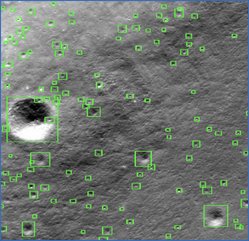
Deciphering the Geological History of Terrestrial Planets through Crater Detection
Participants will explore state-of-the-art crater detection algorithms and their use in planetary geology from remote sensing imagery data, discuss current limitations, and consider their broader implications. Participants will engage in hands-on crater detection data processing and analysis.
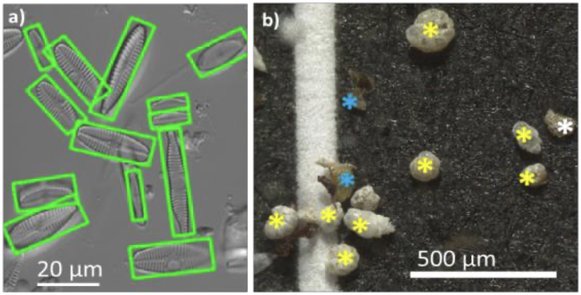
Machine Learning for Microfossils Identification
Practical session focused on the application of artificial intelligence for paleoclimatic applications from microfossils automated analyses (segmentation, classification, morphometry, picking). The program includes a presentation and a guided tour of the MANTA technology platform and its microscopes, prototypes, and robots.
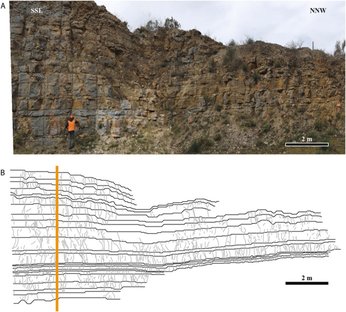
Machine Learning Applied to Lithology Identification
This part addresses the use of learning methods to classify rock types from geophysical logs. Participants will gain practical experience in feature extraction, model training, and interpretation of lithological maps, highlighting the benefits and challenges of ML-driven approaches for subsurface characterization and resource exploration.