One of the mechanisms regulating the Earth’s global climate is linked to thermohaline circulation. The stability of this circulation depends on numerous parameters that are complex to observe and model. There are still considerable uncertainties about the state of circulation in future in the context of climate change. Studies in palaeoceanography have revealed the sensitivity of ocean circulation to surface water temperature and salinity conditions in the Atlantic as well as its role in carbon storage. It is one of the challenges to develop precise methodology to obtain valuable proxies of various parameters able to reconstruct the temporal variability of physical and chemical oceanic parameters. This effort improves our understanding of the mechanisms that drive the thermohaline circulation (or meridional overturning circulation), a key driver of energy transport on a global scale.
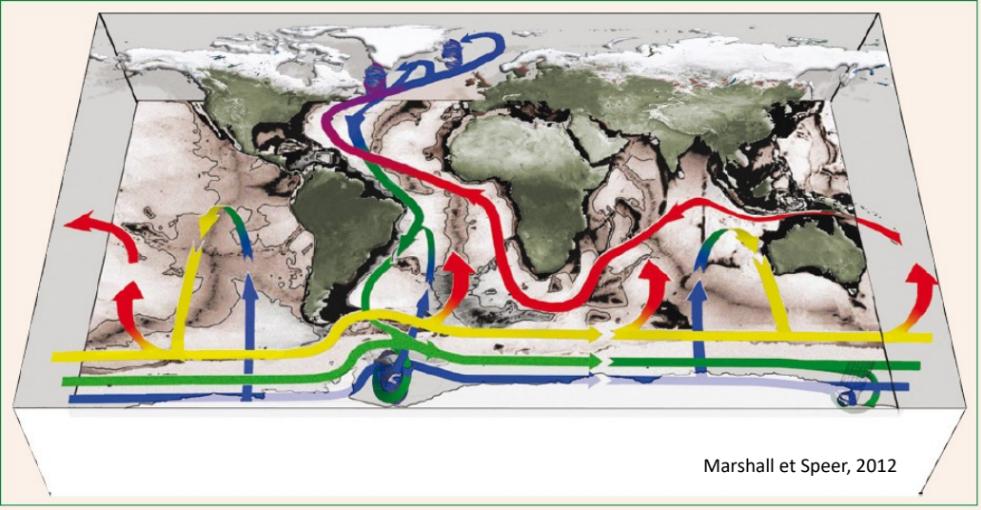
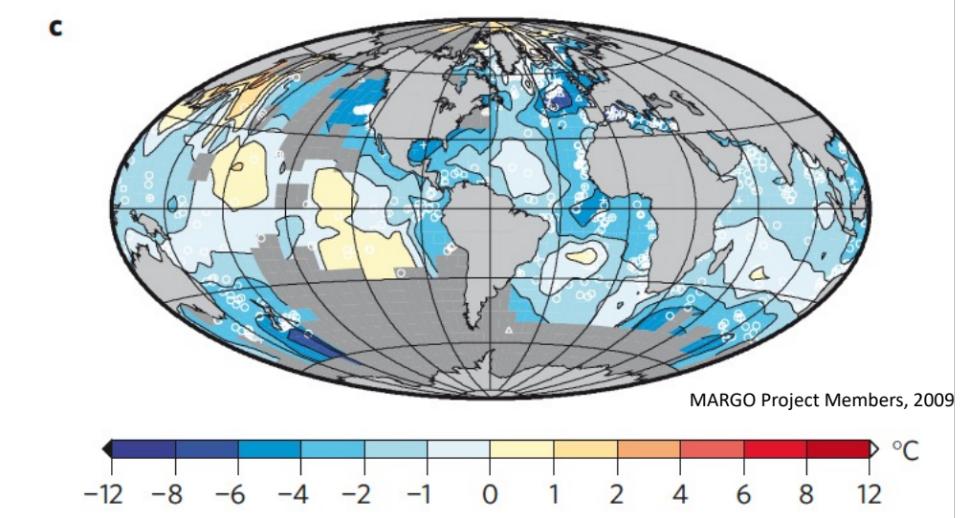
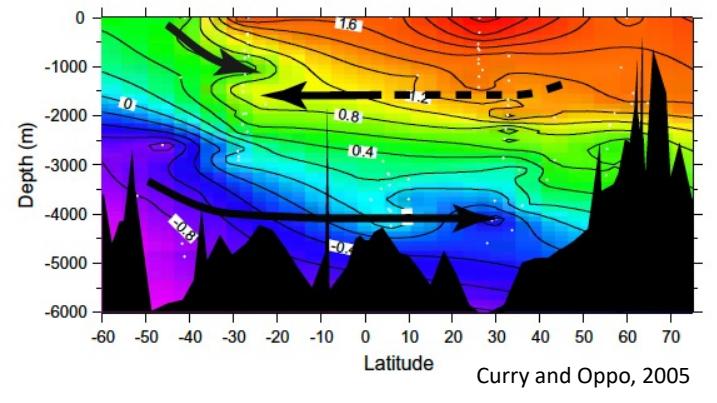
After reviewing the role of thermohaline circulation in global climate dynamics, this course will explore the various geochemical methods used in palaeoceanography to reconstruct parameters such as temperature, salinity, water density, distribution and dynamics of water masses and carbonate chemistry. A synthesis/comparison of the methods will be discussed for different time intervals of the Quaternary as well as the interest of proxy-enabled ocean circulation models.
carbonate d18O and d13C, paleothermometry, Neodynium isotopes